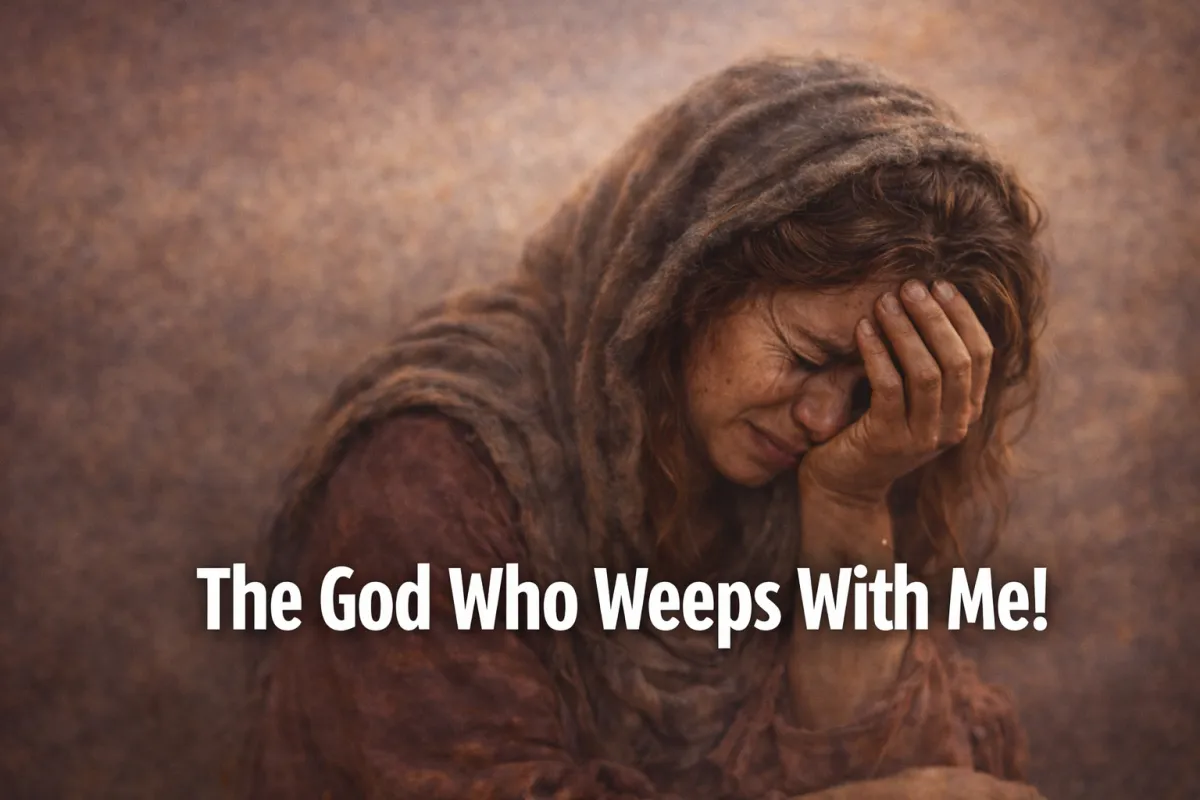
The God Who Weeps With You
Picture her.
Dust on her shawl. Knees bruised from kneeling. Eyes so swollen from crying she can barely see the road in front of her. It's early—the kind of early where the sky hasn't decided if it's night or morning, and the birds haven't started yet, and the only sound is her own sandals scraping stone.
Mary Magdalene is walking toward a tomb.
She's carrying spices. Burial spices. The kind you press between trembling fingers when there's nothing left to do for someone you love except make sure their body doesn't smell like death.
She isn't expecting a miracle. She's expecting a corpse.
This is what grief looks like when it puts on shoes and walks out the door anyway.
But let's rewind. Because before we get to this tomb, there's another one. A different Mary. A different town. A grief just as real.
Bethany. A few weeks earlier.
Lazarus is dead. Four days dead. The kind of dead where the neighbors have already stopped bringing food and started whispering about what happens next to the house. Martha meets Jesus on the road with words that taste like rust and rain:
"Lord, if You had been here, my brother would not have died." — John 11:21, NKJV
No accusation. Just ache. The kind of sentence that forms in the chest long before it reaches the mouth. The prayer of every person who ever watched the ceiling fan spin at 2 AM and whispered, God, where were You?
Jesus tells her Lazarus will rise. She nods the way people nod in hospitals—politely, distantly, holding the theology at arm's length because the theology doesn't smell like her brother's perfume or sound like his laugh.
Then Mary comes. The other sister. And she doesn't stand on the road and discuss doctrine. She falls. Face in the dirt. Same words: "Lord, if You had been here…"
And something happens in Jesus that the Greek language barely has room for.
The word is embrimaomai. Translators have wrestled it for centuries. It means something like a groan that starts below the ribs—an involuntary shudder, the sound a father makes when he finds his child crying alone in a dark room. Not frustration. Not confusion.
Fury at the thing that made her weep.
And then?
Two words. The shortest verse in your Bible. The most Christ-revealing sentence ever written:
"Jesus wept." — John 11:35, NKJV
Now stay here for a moment. Don't rush past this.
Jesus already knew what He was about to do. He had told the disciples days earlier, "Lazarus sleeps, but I go that I may wake him up." He had delayed on purpose so that God's glory could be seen. The ending was written. The stone was about to roll. The dead man was about to walk out blinking into the afternoon sun.
And Jesus cried anyway.
Why?
Why would you weep when you're holding the solution in your own hands? Why would you grieve when you already know how the story ends?
Because Mary was weeping. That's why.
He wasn't crying about the outcome. He was crying about the person in front of Him. He refused—refused—to skip past her pain just because He had the power to end it.
He could have walked straight to that tomb, snapped His fingers, and had Lazarus out in five seconds flat. But He didn't. He stood with Mary first. He let the tears fall first. He made sure she knew He felt what she felt before He showed her what He could do.
This is who God is.
He doesn't fix things from a distance and send you an invoice. He stands at the mouth of your tomb and weeps with you before He speaks the word that changes everything.
Now come back to the garden.
It's Sunday morning. The sky is the color of a bruise. Mary Magdalene reaches the tomb and stops.
The stone is gone.
The body is gone.
She doesn't shout hallelujah. She doesn't dance. She does what grief does when it's handed one more thing it can't understand—she breaks. She stands outside the empty cave and sobs like a child who has lost the last thing she was holding onto.
Peter and John come, look inside, and leave. The text says they "went away again to their own homes."
They saw the evidence. And they walked away.
Mary didn't.
She stayed. She wept. And because she refused to leave—because her grief pinned her feet to that spot like nails—she saw what no one else on earth saw that morning.
Two angels. Then a voice behind her.
"Woman, why are you weeping? Whom do you seek?"
She thinks He's the gardener. Can you see it? Eyes blurred, nose running, voice cracking—she begs this stranger to tell her where they've moved the body. She just wants to hold onto something. Anything.
And then He says one word.
Just one.
Her name.
"Mary."
— John 20:16, NKJV
And the entire universe tilts back into place.
She didn't recognize Him by His face. She didn't recognize Him by His voice when He asked a question. But the moment He spoke her name—the way He always spoke it, the way nobody else ever had, the way a shepherd calls the one sheep he's been searching for all night—she knew.
"Rabboni!"
But here's where the story does something that should put you on the floor.
Mary reaches for Him. Of course she does. And He says: "Do not cling to Me, for I have not yet ascended to My Father."
He hadn't gone to the Father yet.
Think about what that means. On the Day of Atonement, the High Priest carried the blood of the sacrifice into the Holy of Holies—the innermost room of God's presence—and placed it on the mercy seat. It was the most sacred moment of the Jewish year. If the priest got it wrong, he died.
Jesus was the final High Priest. And on that morning, He was carrying something the old priests never could—His own blood. The offering that would reconcile every broken, wandering, sin-sick soul back to God. The most important errand in the history of the cosmos was still unfinished.
Heaven was waiting.
The mercy seat was waiting.
The redemption of the entire human race was in motion.
And when He saw a woman crying in a garden…
He stopped.
He didn't say, "Can't talk now, Mary—the fate of humanity is on the line."
He didn't send an angel in His place.
He didn't pencil her in for later.
He appeared to her. He spoke to her. He called her by name. He comforted her.
The throne room of heaven was holding its breath—and the risen Christ stood in the dew-soaked grass with a weeping woman and made sure she knew she was not alone.
I need you to sit with that.
Because if He did that for Mary—if He paused the salvation of the world for one person's tears—what makes you think He's too busy for yours?
Maybe right now you feel like Mary at the tomb.
It's dark. Something you loved is gone. The stone has been rolled over a dream, a marriage, a diagnosis, a person whose voice you'd give anything to hear one more time. And you're standing outside the cave with nothing but spices and sorrow, wondering if God even sees you.
He sees you.
Maybe you feel like Martha on the road—believing the right things, saying the right words, but inside you're screaming: Lord, if You had been here, this wouldn't have happened. Why didn't You show up sooner? Why didn't You stop it?
He hears you.
Maybe you're the single mom who falls asleep with a calculator and wakes up to another past-due notice.
Maybe you're the businessman who built every ladder and hates every rung.
Maybe you're the teenager whose shame feels like a locked room with no windows.
Maybe you're the widow who sets one plate at dinner and can't remember the last time she laughed out loud.
There is a God who runs toward your weeping—not away from it.
And He is doing right now what He did at both of those tombs: walking into your specific darkness, standing in your specific grief, and speaking your specific name.
Not a title. Not a category. Not "Hey, you."
Your name.
"Fear not, for I have redeemed you; I have called you by your name; you are Mine." — Isaiah 43:1, NKJV
The resurrection isn't asking you to stop crying.
The resurrection story itself is soaked in tears. Mary wept. Martha wept. The disciples wept. Jesus wept. Grief isn't the enemy of faith. It's often the very soil faith grows in.
"Those who sow in tears shall reap in joy." — Psalm 126:5, NKJV
Your tears are not wasted. They are seed.
So if you're standing in the dark this morning—stay.
Don't walk away like Peter and John did. Don't go home to your routines and your distractions and your comfortable distance from the tomb. Stay.
Stay in the honesty. Stay in the ache. Stay in the tears.
Because the people who stay at the tomb are the ones who see the risen Christ.
And when you hear your name—spoken the way only He speaks it, with the tenderness of someone who has been watching the horizon for you since before you were born—you will know.
You will know it's Him.
And you will know you were never, not for one second, alone.
"Lo, I am with you always, even to the end of the age." — Matthew 28:20, NKJV
Not when you're strong. Not when you've earned it. Not when the tears have dried.
Always.
That's the God who walked out of that tomb.
And that's the God who is standing beside you right now.
